Local detail
When to Get Help
Call sooner on an attached garage than a detached one. When a door on an attached garage binds, drags, or won't seal at the bottom, you're not just losing a garage, you're losing the air seal on a wall that backs onto living space - a bedroom, a mudroom, sometimes a kitchen. On a detached structure, a stuck door is an inconvenience; on an attached one in a severe-cold climate like ours, it's a draft source that shows up on the heating bill before it shows up as a visible problem.
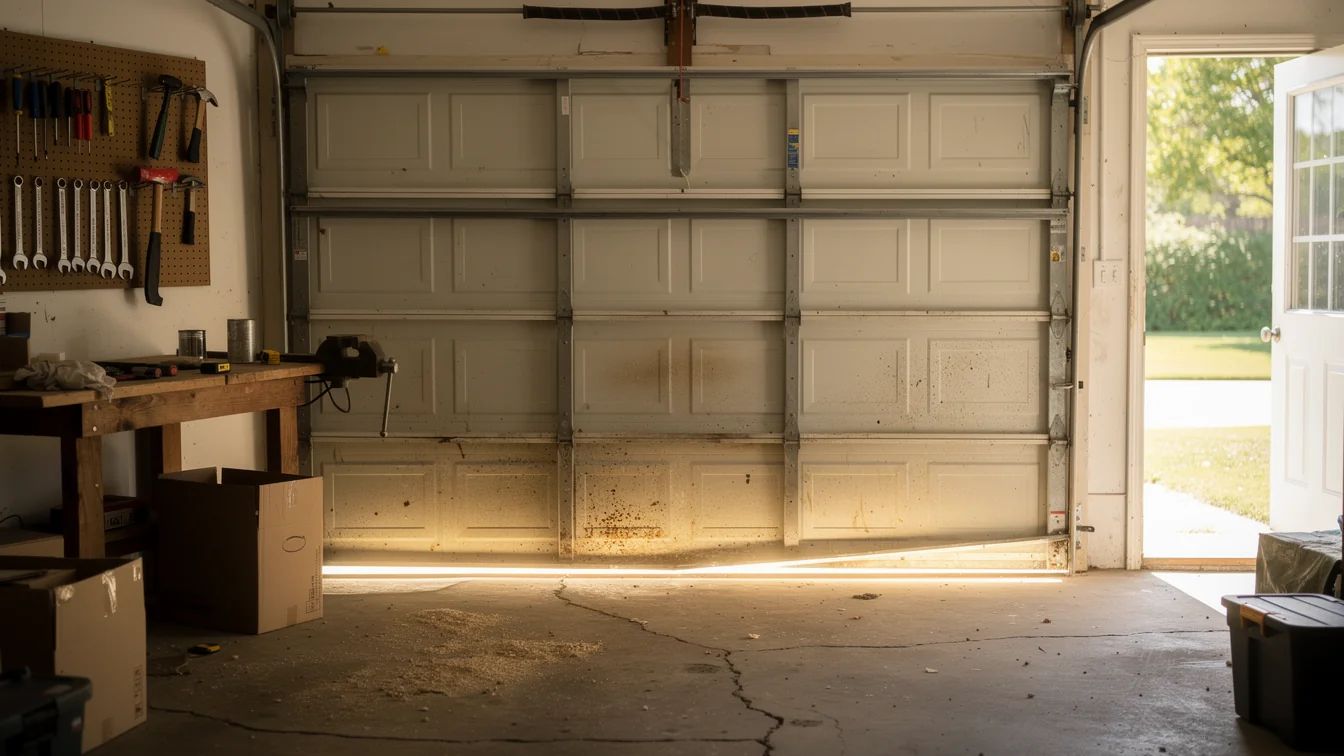
Get someone out if the door won't close all the way, if you hear a bang or a pop from the spring side when it moves, or if the bottom seal has pulled away from the slab. On detached garages, you can usually wait for a scheduled visit. On attached ones sharing a wall with the house, a gap at the header or around the panel is worth a same-week look, not a someday one.
Either way, if the opener is straining, reversing, or the door is visibly racked in the track, that's a spring or cable issue, not an opener issue, and it's not a DIY fix.
The area
What Is Going On
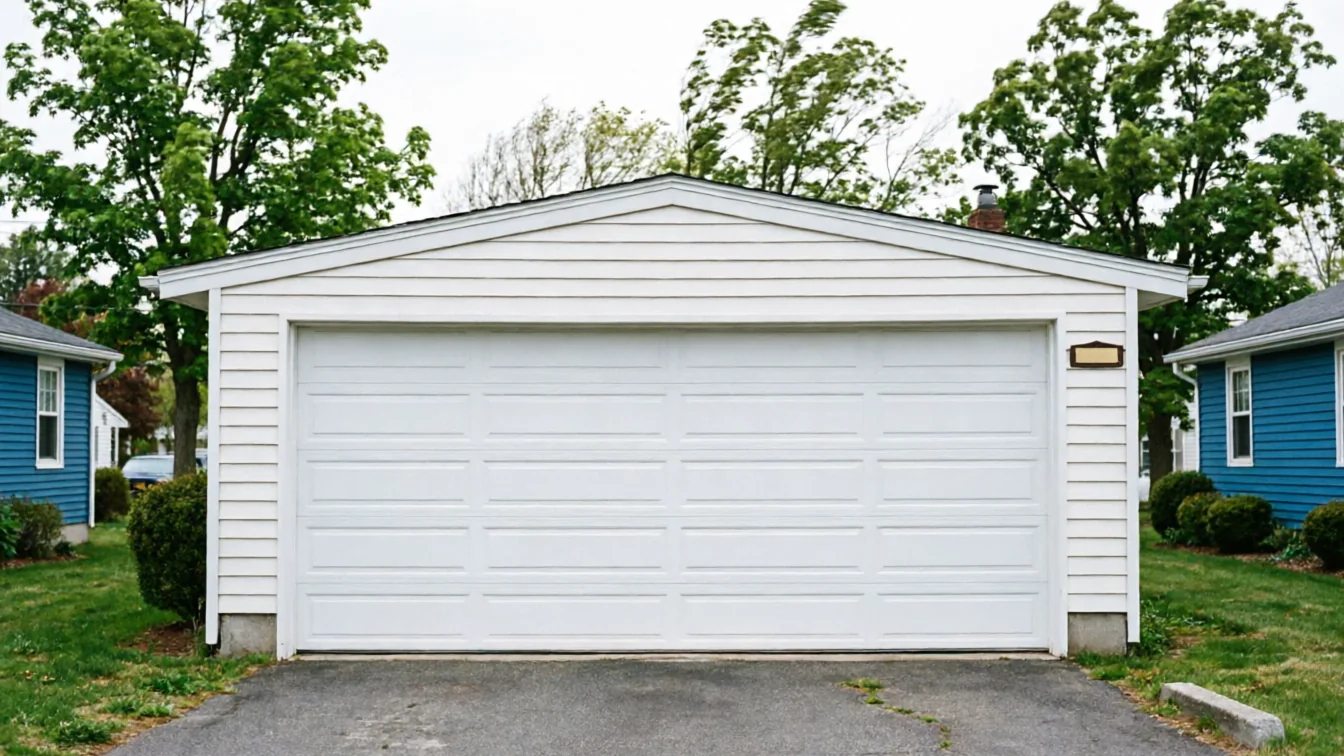
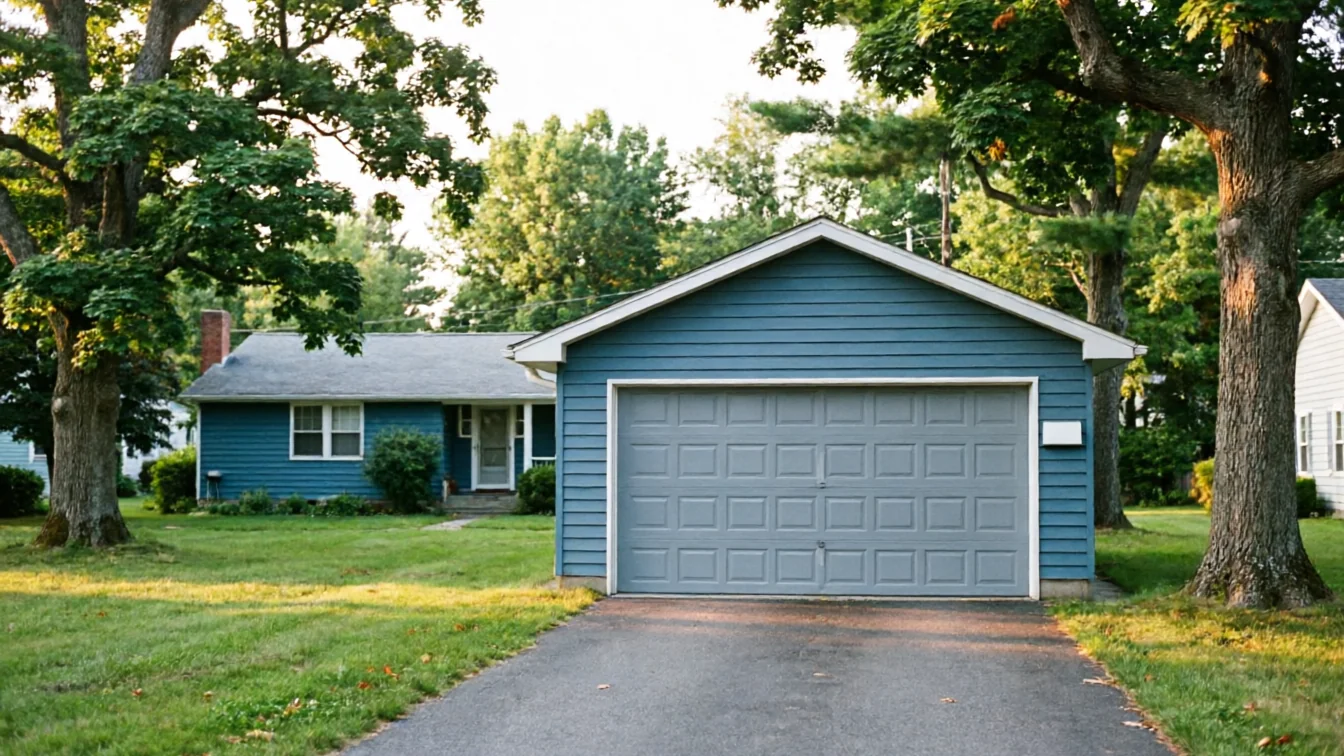
The area's housing mostly dates 1938 to 1995, with the median landing around 1972, and that stretch covers two very different ways garages got built. A lot of the older stock, especially detached garages set back from the house, was framed as a standalone structure with its own simple header - no real tie-in to the house's envelope. Later construction, more common as the stock pushes toward the 1970s and beyond, attached the garage directly, sharing a wall and often a roofline with the house.
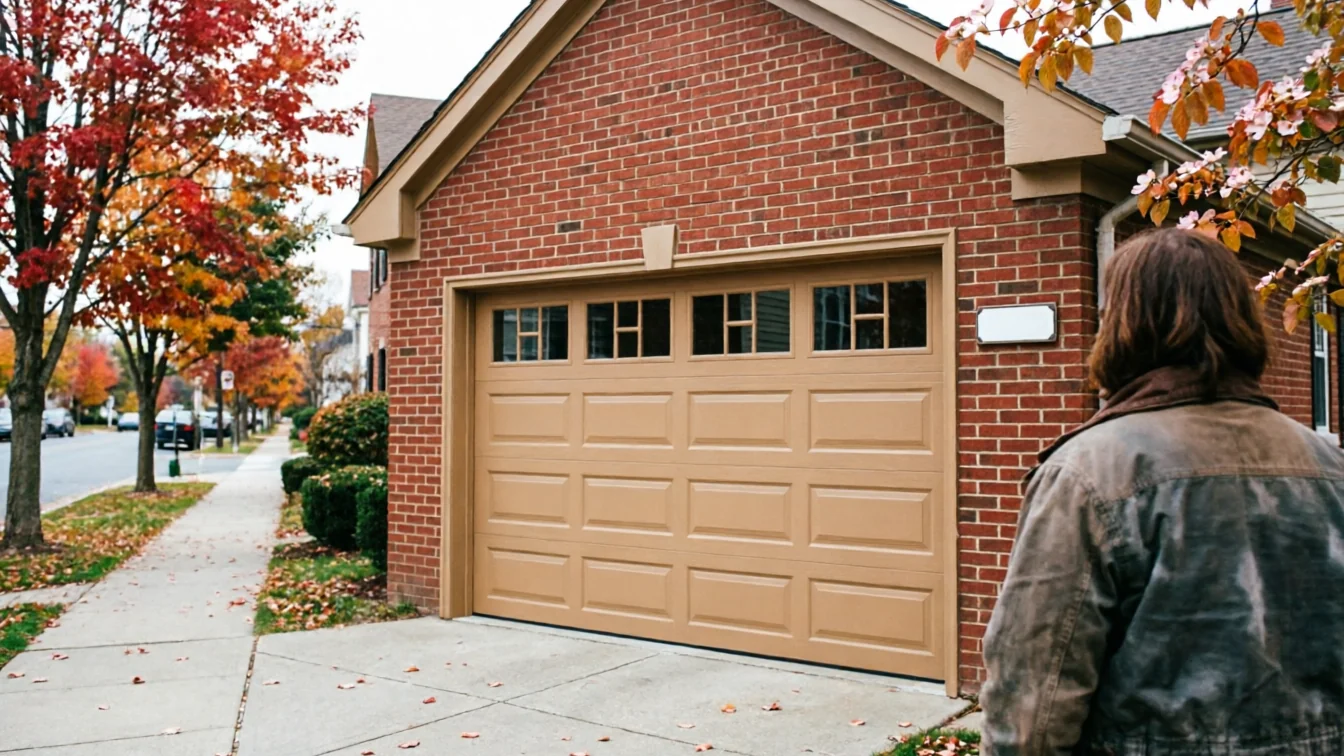
That difference matters for the door itself. A detached garage door only has to keep out weather and whatever you're storing. An attached garage door is part of the thermal boundary of the house - its seal, its header flashing, and its insulation value (if any) are doing real work. A worn bottom seal on a detached structure means a cold garage. The same wear on an attached one means a cold wall cavity next to it.
Across the 58 named areas that make up this part of the stock - Grantley, Valley View, Spry, Shiloh and the rest - we see both setups side by side, sometimes on the same street, because the era of construction didn't standardize which you got.
What we find
Doing Nothing For Now
On a detached garage, doing nothing for a season is usually fine. If the door still closes, still latches, and the spring isn't audibly stressed, you can let a cosmetic issue - a dented panel, a slow-closing opener - ride until it's convenient. Nobody's heating bill changes because a detached garage door has a worn seal.
That's not true on an attached garage. Here, deferring a seal or header repair through a cold-band winter means paying for it in heat loss the whole season, even if the door still opens and closes without complaint. The honest limitation: we can't always tell from a phone call whether your gap is a seal problem (cheap, fast) or a settled header problem (more involved, sometimes a full reframe). That needs someone looking at it.
One more limit worth naming - if a door built in this era's older framing has sagged enough that the opener is doing the work the frame used to do, replacing the opener won't fix it. That's a structural call, not a parts call, and it's worth saying plainly instead of selling a part that won't solve it.
How we work
What Local Conditions Do
We're in a severe cold band here, and it treats detached and attached doors differently. On a detached garage, cold mostly just means a hard-to-lift door if the spring tension has drifted, or a track that's stiff until the grease warms up. Annoying, not dangerous to the house.
On an attached garage, the same cold works on the seal between the door and the house. Houses built mid-stock, 1960s and 70s construction especially, often have minimal insulation at that junction to begin with, so a compromised seal lets cold air sit right against a shared wall all winter. With 56,194 owner-occupied houses across this service area, we see this split constantly: a detached door that's just old, and an attached door that's old and also costing someone money every month in wasted heat.
If you're not sure which situation you've got, the easiest test is simple - stand in the garage on a cold day and run a hand along the top and sides of the door. Detached garages, a draft there is expected. Attached garages, that same draft usually means the seal or weatherstrip needs replacing before the next cold stretch, not after it.
Talk to a local pro
Garage door trouble in York?
Same-day service with honest, upfront quotes.