Local detail
When to Get Help
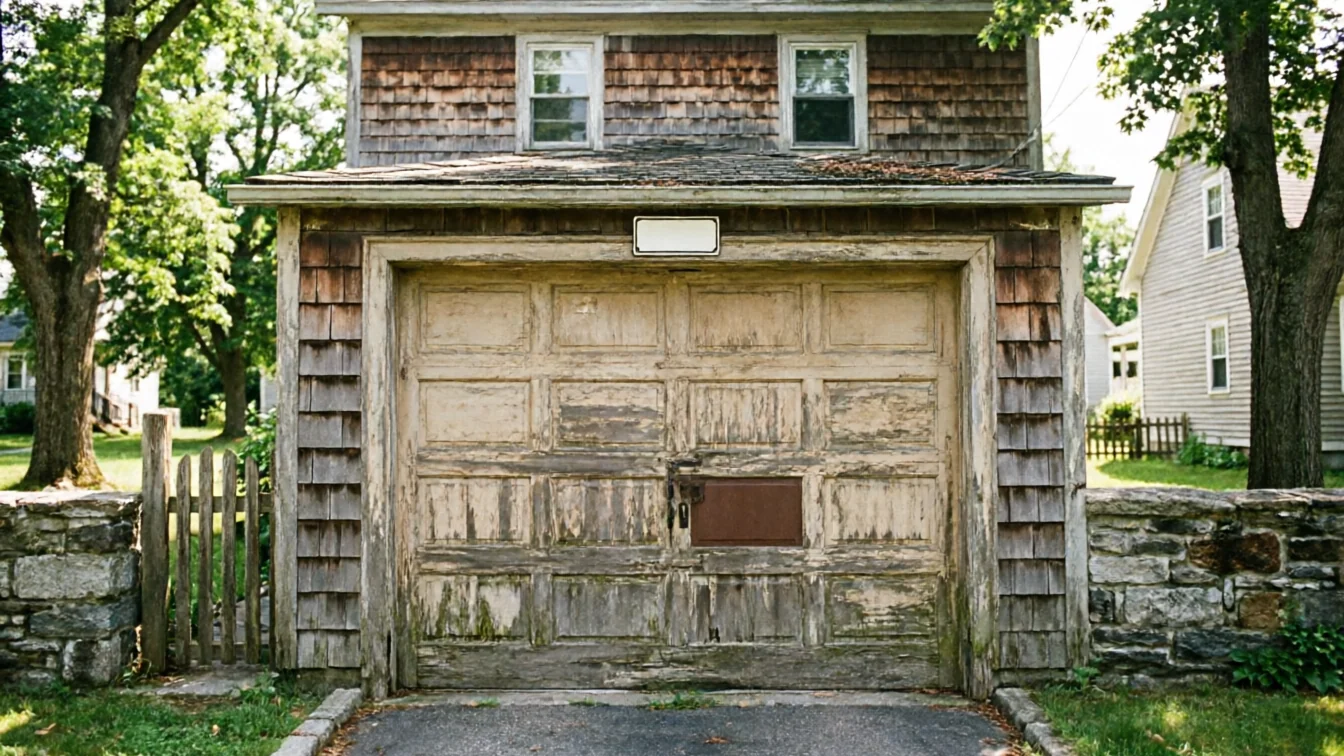
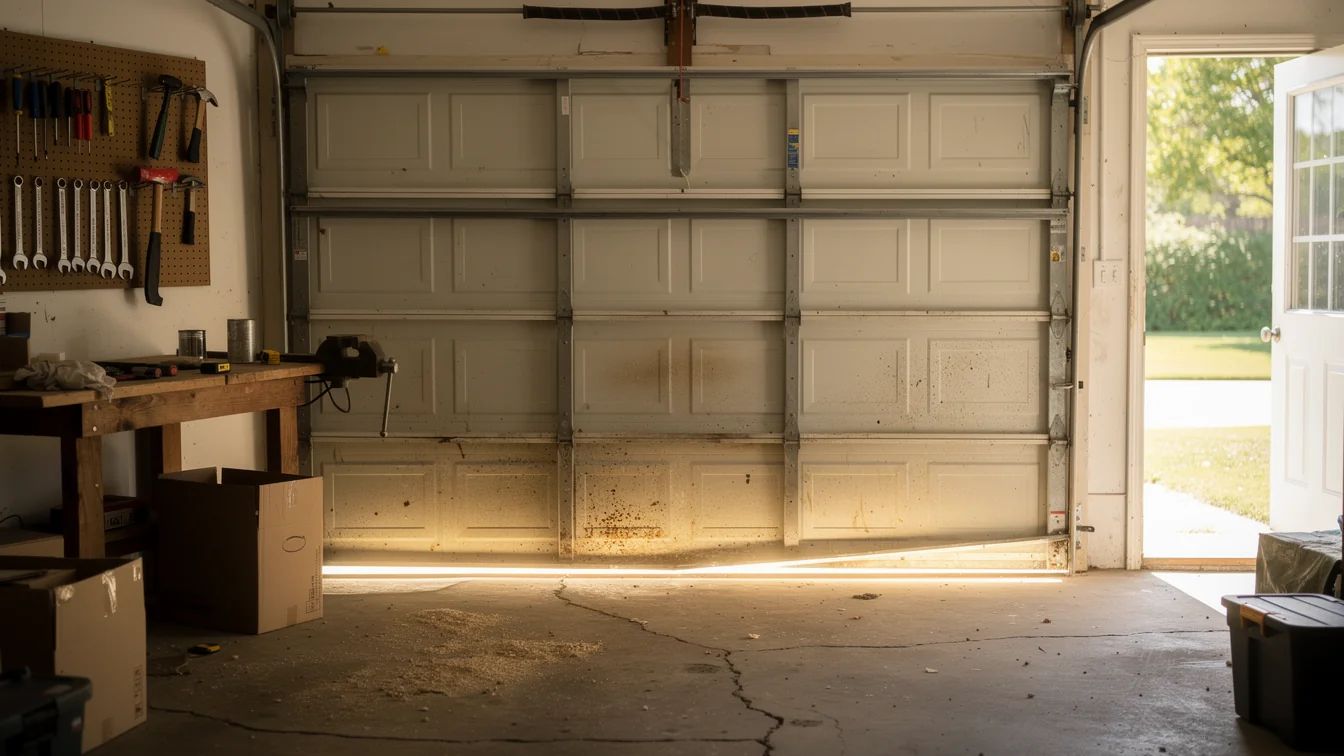
If your house is part of the 1938-1995 wave that makes up most of the housing stock across the York service area, your garage door was almost certainly installed to the standards of its decade, not ours. A door hung in 1965 was built to keep rain and leaves out of the garage, not to hold heat in or stand up to the cold snaps this part of Pennsylvania gets most winters. Call for help when you notice the door feels heavier than it should when you lift it by hand, when the panel face is cold to the touch and sweating on the inside in January, or when the bottom seal has gone stiff and cracked and no longer sits flat against the slab. Those are signs the door and its hardware are original or close to it, and that the materials have reached the end of what they were built to do. Don't wait for a spring to let go before you look at the door itself - a broken spring on a 50-year-old door usually means the drums, cable, and track are due too, not just the spring.
The area
What Is Going On
Across the 58 named areas that make up this service territory, the bulk of the housing dates to the 1960s and 70s, with the overall range running 1938 to 1995. Doors from that era are typically a single layer of steel or wood with no foam core, hung on hardware sized for a lighter, uninsulated panel. When homeowners later added insulation board or a second skin to cut heat loss, the extra weight went onto springs and rollers that were never sized for it. That mismatch is common on this side of York - not because anyone did shoddy work, but because the door predates the energy codes that came along well after the house did. The result shows up as a door that's slow to open, a opener that strains on the last foot of travel, or hinges that have worked loose from years of carrying more load than they were designed for.
What we find
Doing Nothing For Now
Leaving an old, uninsulated door alone isn't automatically a mistake - plenty of these doors still run fine on original hardware, and replacing a door that works is money you don't need to spend. Where it stops making sense is in a COLD-severe climate like this one, where an uninsulated steel panel becomes a cold wall against an attached garage all winter, and where condensation on that cold panel can drip onto a slab and freeze. If the door still opens and closes square, the track is straight, and the springs are rated for the weight on them, there's no urgency. The honest limit here: we don't push replacement on a door that's doing its job just because it's old. We will tell you when the spring, cable, or hinge wear on a house this age means a repair won't hold much longer, and that's worth knowing before a cable snaps on a cold morning.
How we work
What Local Conditions Do
A severe cold climate is hard on garage door steel and hardware in ways that show up gradually. Steel contracts in low temperatures, which tightens tolerances on track and rollers that were already decades old, and lubricant that was fine in summer thickens and slows hinges and rollers in January. On a door built before insulation rules existed, that cold also moves straight through the panel into the garage, and if the garage shares a wall with living space, that cold wall works against the rest of the house. With median household income across the service area at $80,694 and roughly 56,194 owner-occupied houses in a base of 124,909 households, a lot of these doors are on owned homes where a well-timed repair, rather than a full tear-out, is often the right call. The nearest of the named communities we work in - Grantley, Valley View, Emigsville, and East York, all within a couple miles - sit in the same housing-age band, so the pattern repeats block to block.
Talk to a local pro
Garage door trouble in York?
Same-day service with honest, upfront quotes.