Local detail
When to Get Help
If your door reverses before it touches the floor, or the opener light blinks a pattern instead of running the motor, that's the safety sensors telling you something. Call when you see the door stop a few inches up, reverse mid-close for no reason, or when one sensor light stays dim or flickers depending on the time of day. In a lot of York's older neighborhoods - houses going back to the 1940s through the 1970s - these symptoms show up more in winter, when a slab that's shifted even an eighth of an inch over the decades throws the sensor beam off just enough. If you've already tried wiping the lenses and they still won't hold alignment, that's a bracket or wiring problem, not a dirt problem, and it's worth a call rather than more guessing.
The area
What Is Going On
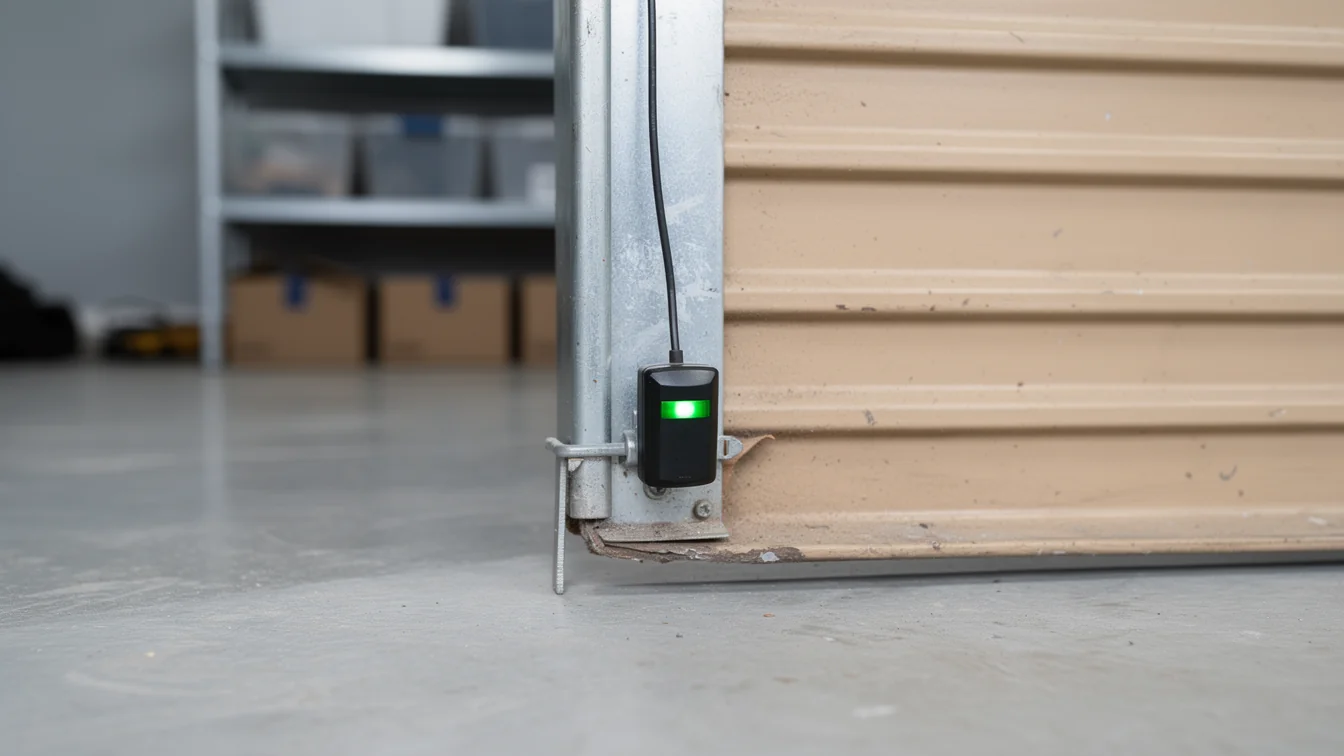
Safety sensors are two small eyes mounted a few inches off the garage floor, one sending an infrared beam, the other receiving it. When something breaks that beam, the door won't close. The brackets holding them are usually thin steel, screwed into wood trim or the track itself, and on houses built in the median York era - 1972 - that trim has had fifty-plus years of seasonal swelling and shrinking to work the screws loose. A bracket that's off by even a few degrees sends the beam a little high or low, and the receiver starts missing it intermittently rather than consistently, which is why the fault seems random instead of constant. Add a garage floor slab that's cracked or settled slightly, common across the 1960s-70s stock that makes up most of the area's housing, and the two sensors that used to line up across six feet of floor no longer sit at quite the same height.
What we find
Doing Nothing For Now
You can live with occasional sensor trouble if you're home and watching the door every time it closes, but that's not a real fix and it's not safe if a kid or a pet is anywhere near the opening. Letting it ride through a York winter is the worst time to put it off - the cold severe conditions here mean more freeze-thaw cycling in the slab and more contraction in whatever bracket or mounting is already loose, so a sensor that's merely twitchy in October tends to get worse, not better, by February. We won't tell you every flicker needs a truck roll the same week. But a door that won't close reliably is a door you're forcing shut manually, and that habit is how people get hurt or bypass the sensors altogether, which defeats the reason they're there.
How we work
What Local Conditions Do
This matters more here than it would somewhere with newer housing stock or a milder winter. Across the 58 named areas that make up this part of York, the bulk of the houses date to the 1960s and 70s, with the overall range running 1938 to 1995. That's a lot of original concrete, original wood jamb trim, and in some cases original brackets that have never been replaced. Cold severe winters mean the slab under that door moves every year, and wood trim that's held a screw since the Johnson administration doesn't hold it as tight now. None of that means your sensors are broken - usually they're fine, and the fix is a bracket reset and a realignment, not new parts. But it does mean a one-time adjustment on a 1970s build in this climate won't hold the way it would on a house built last year, and if yours keeps drifting back within a season or two, that's the slab and the trim talking, not us doing the job wrong.
Talk to a local pro
Garage door trouble in York?
Same-day service with honest, upfront quotes.