Local detail
When to Get Help
A garage door makes noise every time it runs. The question is which noise is normal wear and which one means a part is about to let go. If you hear a loud bang followed by the door going slack or refusing to lift, stop using it and call. That's almost always a torsion spring snapping, and on the double doors common across York's 1960s and 70s-built neighborhoods, a broken spring means the door is too heavy to lift safely by hand or opener.
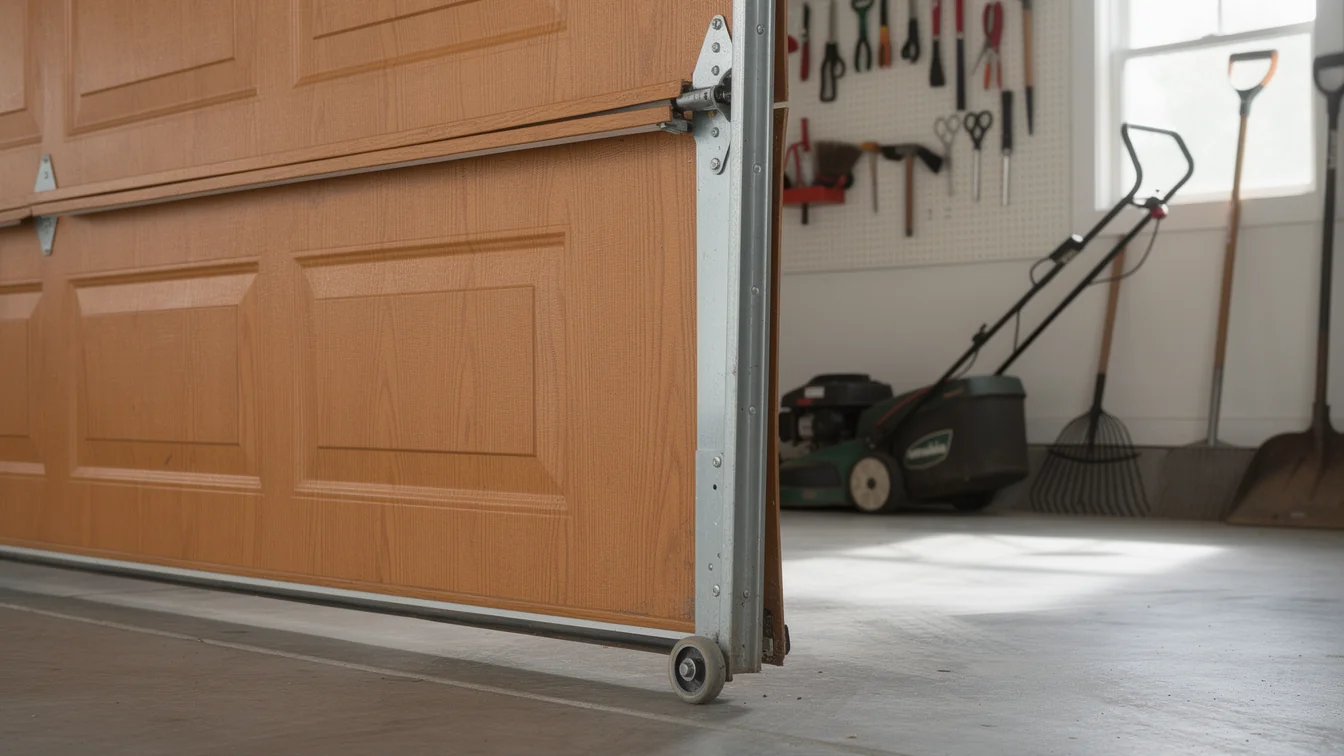
Grinding that gets worse week over week, not noise that's always been there, is the other call-now signal. New grinding usually means a roller has lost its bearing or a cable strand is fraying against the drum. Either one can jump the track without warning.
If the noise is a rhythmic squeak that's been there for months and the door still opens and closes smoothly, that's maintenance, not an emergency. Get it looked at on a normal schedule rather than treating it as urgent. The difference between those two calls is whether the sound is new and escalating, or old and steady.
The area
What Is Going On
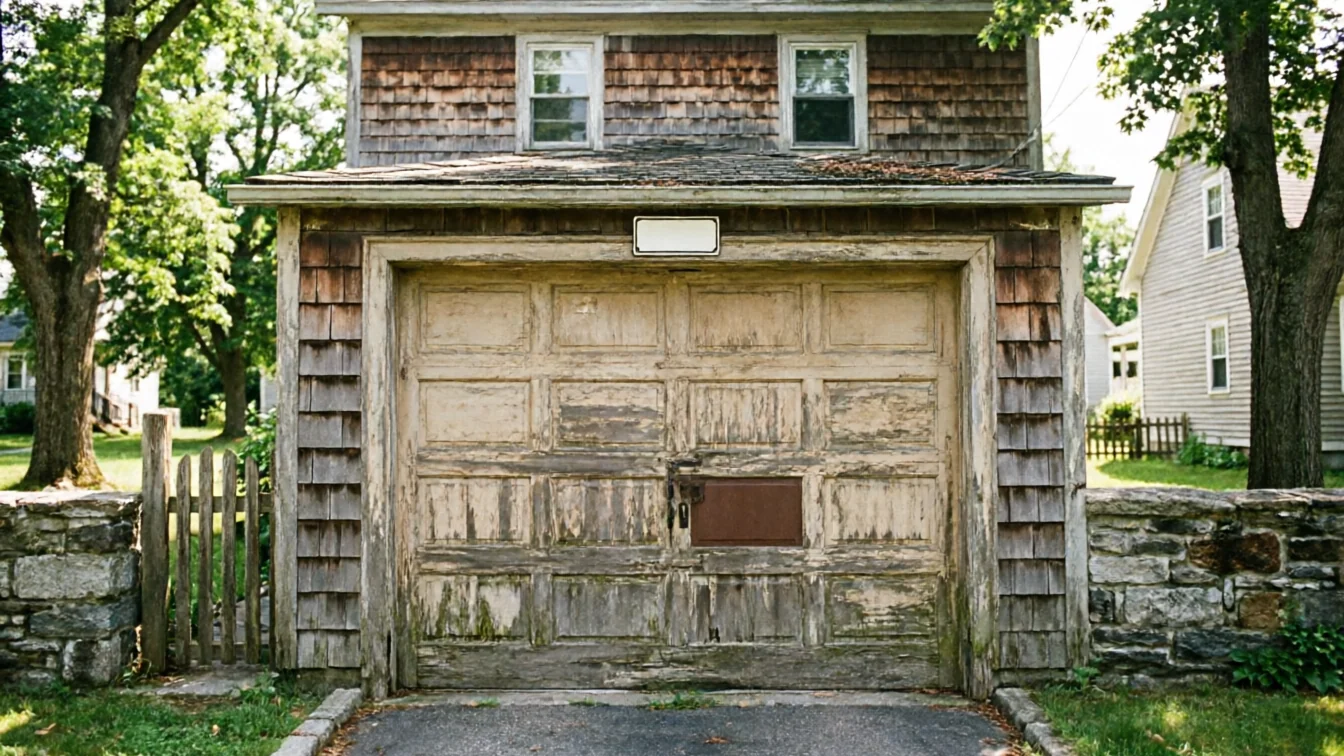
Most houses on this side of York went up between 1938 and 1995, with the bulk of that stock dating to the 1960s and 70s across the 58 named areas in the service territory. That means a lot of original or first-replacement hardware: steel torsion springs rated for a specific cycle count, galvanized track that was never resized for heavier insulated doors added later, and rollers that were nylon or steel depending on what the builder spec'd that decade.
A popping sound on cold mornings is often the torsion spring contracting against its shaft after a hard freeze - the metal and the lubricant both stiffen. A low hum right before the door moves is usually the opener motor working against drag in an old track that's gone slightly out of square over fifty-plus years of settling. A sharp click near the top of the travel is frequently the door hitting a worn-out stop or a limit switch that's drifted.
None of these sounds tell you exactly what's wrong without a look at the hardware, but the age of the house is the first clue. A door installed when the house was built has had five decades to work its springs, bearings, and cable through their rated life.
What we find
Doing Nothing For Now
Not every noise needs a truck out that day. If the door is quiet most of the time and only squeaks on the coldest mornings, that's consistent with stiff lubricant in a cold-climate winter and isn't urgent. A light application of the right lubricant on hinges and rollers - not the springs - often quiets it down until a scheduled visit.
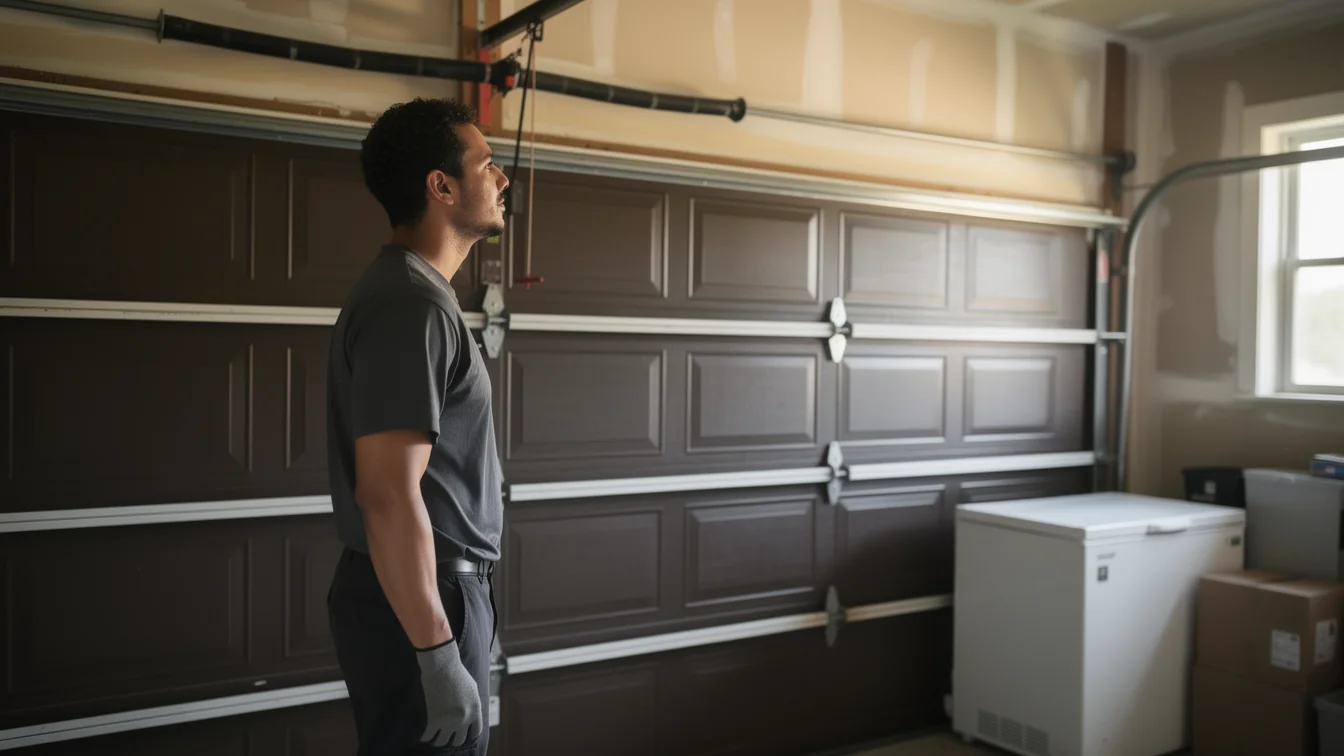
Here's the honest limit: we can't tell you over the phone whether a noise is cosmetic or structural. Spring and cable wear doesn't show up as a steady decline you can track - it fails all at once, often with no additional warning past a louder-than-usual pop. If you're unsure whether to wait, the safer habit is to run the door through one full cycle while watching the springs and cables rather than listening for the sound alone. Uneven movement, a visible gap in a spring coil, or a cable that's fraying means stop waiting regardless of how quiet things sound otherwise. Waiting is fine for comfort noise. It isn't fine for anything involving the springs or the lift cables, because those are the parts carrying the full weight of the door when it's open.
How we work
What Local Conditions Do
York's winters sit in a cold, severe climate band, and that matters for garage door hardware specifically. Steel torsion springs lose tension and become brittle-feeling in sustained cold, which is why popping and banging sounds cluster in January and February rather than July. Garage door lubricant also thickens in cold garages, which is why a door that ran quiet in October can start groaning by December without anything actually breaking.
The housing age compounds this. A spring or cable installed when a 1960s or 70s York house was built has already been through fifty-plus winters of that same contraction-and-expansion cycle. Metal fatigue from decades of cold snaps is a real, cumulative load on top of normal use - it's not just mileage, it's mileage in a climate that stresses the hardware twice as hard each winter as it would in a milder region. That combination - old hardware, severe cold - is why a noise that would be nothing in a newer door in a warmer climate deserves a second look here.
Talk to a local pro
Garage door trouble in York?
Same-day service with honest, upfront quotes.